
When Data Goes Missing: What Every Researcher Needs to Know About the Silent Problem

Created by:

"In the world of research, many find themselves battling the time-consuming task of sifting through their datasets to uncover missing values and invalid entries. This challenge can skew results and mislead conclusions, posing serious risks to the integrity of their findings. Understanding the causes of missing data and implementing effective strategies is crucial for enhancing research quality and ensuring accurate narratives."
Genie is here to lend a hand in this intricate process, streamlining the analysis and mitigating the risks associated with data gaps.
Picture This
you’re in the thick of your research, energized and ready to dive into your analyses, when suddenly you notice something unsettling—some of your data is incomplete. Maybe a handful of survey responses are mysteriously blank, or perhaps crucial lab results never made it into the records. How do you tackle this unexpected challenge?

Missing data can present a formidable challenge in research, often lurking in the shadows of your findings, ready to skew results and mislead conclusions. It’s a subtle adversary; sometimes easy to overlook, but its impact can be profound. Imagine conducting meticulous research only to have gaps in your data subtly twist the narrative of your findings.
The silver lining? Gaining insight into the reasons behind missing data empowers you to tackle the issue head-on. By understanding the nuances of why data is absent, from participant dropout to recording errors, you can refine your approach and bolster the integrity of your study.
Genie is here to lend a hand in this intricate process, streamlining the analysis and mitigating the risks associated with data gaps. Embracing these strategies not only enhances your research but also enriches the story your data has to tell.
Understanding the Impact of Missing Data: Types and Implications
When it comes to data, the way it goes missing can significantly impact how you manage it and the potential consequences it brings. There are three main types of missing data, each requiring a different approach to minimize damage:
- Missing Completely at Random (MCAR): This type of missingness is entirely random, like accidentally losing a few pages from a book. In this case, the missing data isn't influenced by any variables or even the values that are missing, making it the least troublesome to deal with.

Missing completely at Random (MCAR)
- Missing at Random (MAR): Here, the absence of data is related to other observed variables. For example, older patients may skip certain questions, meaning we can see a connection between age and the likelihood of missing responses. This is a bit more complex, but understanding this relationship allows for adjustments in your analysis.

Missing at Random (MAR)
- Missing Not at Random (MNAR): This situation is the trickiest because the missingness is influenced by the very values that are absent. For instance, patients with depression might avoid questions about mental health, creating a bias that’s hard to correct for. This makes MNAR the most challenging type to work with.

Missing not at Random (MNAR)
Knowing which type you're faced with is crucial. It not only informs your analysis strategy but also helps you anticipate the potential impacts of the missing data on your findings.
The Hidden Dangers of Missing Data- Why It's More Than Just a Minor Oversight..?
Missing data might seem like a trivial inconvenience, but it can carry significant consequences for your research. Here’s why overlooking it can lead to unexpected pitfalls:
- Bias Introduction: When you ignore missing data, you're potentially introducing bias that skews your results. This can make your findings less representative of the true population, leading to distorted perceptions and conclusions.

-
Diminished Statistical Power: Missing data can dampen your study's statistical power, making it increasingly difficult to identify real effects. Essentially, your ability to uncover genuine relationships or differences is compromised.
-
Misleading Conclusions: Perhaps most alarmingly, overlooking missing data can drive you to make erroneous conclusions that influence important decisions.
Consider a clinical trial scenario: if patients who aren’t responding well to treatment drop out and their data goes missing, failing to account for this could lead you to falsely believe the treatment is more effective than it actually is. This not only misrepresents the efficacy of the treatment but can also lead to misguided clinical practices and patient outcomes.
Common Techniques to Handle Missing Data
Ultimately, acknowledging and addressing missing data is crucial for the integrity of research and the validity of its conclusions. Don't underestimate the impact of a seemingly minor oversight! Researchers typically handle missing data through several methods:
-
Complete-case analysis: Only uses cases with no missing data, which can lead to bias and loss of valuable information.
-
Mean imputation: Fills in missing values with the average, but may underestimate variability and distort relationships.
-
Multiple imputation: Creates multiple plausible datasets to account for uncertainty, but requires more expertise.
Genie to the Rescue: How Genie Simplifies Missing Data Handling
Genie transforms the painful task of dealing with missing or invalid data. With one click, Genie’s Data Validation Wizard:
- Identifies missing values with counts and percentages
- Flags nonsensical entries (like a height of 3 meters)
- Detects potential outliers that could skew results
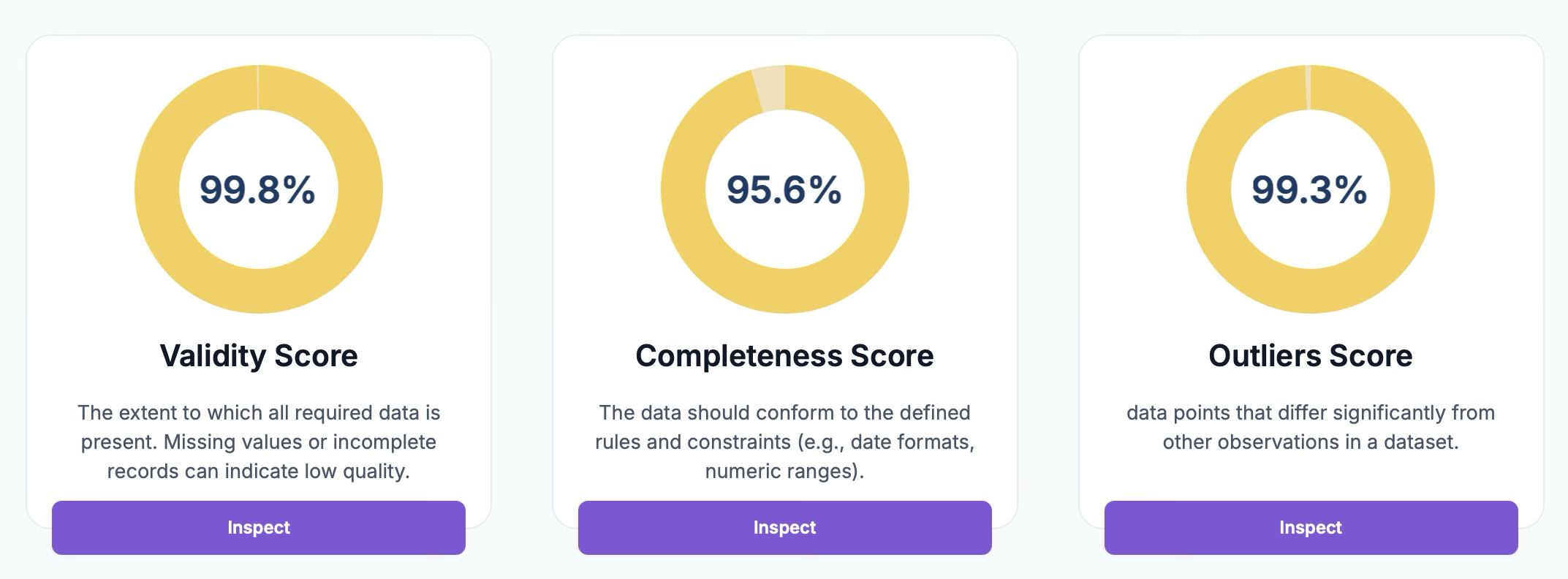
Genie saves hours of cleaning time, letting researchers stay focused on insights instead of firefighting spreadsheets.
💡 Quick Tips for Managing Missing Data
- Identify patterns early
- Avoid oversimplified fixes like mean imputation
- Use tools that support advanced techniques like multiple imputation
- Document how you handled missing data
- Leverage platforms like Genie for automation and validation
Conclusion
Missing data can quietly derail your research, but understanding its causes and how to tackle it is crucial for preserving your study's integrity. With tools like Genie on your side, you can quickly identify and manage issues, ensuring your research remains reliable and sound.